
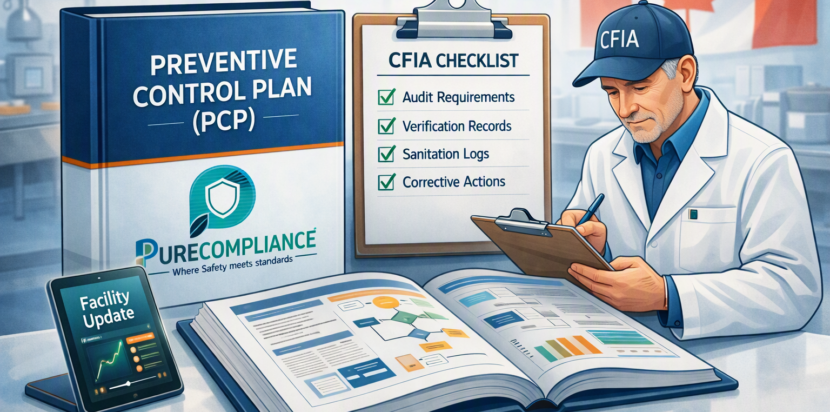
A food safety competitive advantage begins when compliance becomes more than simply meeting regulatory requirements. Strong food safety systems can also help businesses reduce risk, improve consistency and prepare for growth.
A well-designed food safety system can help reduce operational risk, improve consistency, strengthen employee accountability, support customer requirements and prepare a business for growth.
The difference is in how compliance is approached.
When HACCP plans, Preventive Control Plans (PCPs), SOPs, training and verification activities are treated simply as documents that must exist, they can quickly become another administrative burden. But when those same systems are integrated into everyday operations, they become tools that help a business operate more effectively.
Here are five ways food businesses can move beyond simply meeting requirements and use food safety as part of a stronger business strategy.
1. Strong Food Safety Systems Reduce Business Risk
Food safety controls are designed to protect consumers, but they also protect the business itself.
A strong system helps identify potential problems before they become larger issues. This can include allergen-control failures, sanitation concerns, temperature deviations, supplier issues, traceability gaps or inconsistent production practices.
The Business Advantage: When monitoring, verification and corrective-action processes are working effectively, problems can be identified earlier and addressed before they escalate.
Instead of viewing food safety controls simply as regulatory obligations, businesses can use them as part of their overall risk-management strategy.
2. Good Systems Improve Operational Consistency
Clear procedures help employees understand what needs to be done, how it should be done and what to do when something goes wrong.
Well-developed SOPs, monitoring procedures and records can reduce uncertainty and help ensure important activities are performed consistently across employees, shifts and production days.
The Business Advantage: Greater consistency can support product quality, reduce avoidable errors and make it easier to identify when a process is moving outside established requirements.
A procedure should not exist simply because an auditor expects to see one. It should make the operation easier to control.
3. Audit Readiness Can Support Business Growth
As food businesses grow, their compliance expectations often grow with them.
New customers, retailers, distributors or markets may require stronger documentation, supplier controls, traceability systems, audits or recognized food safety programs.
Businesses that wait until a major opportunity appears before strengthening their systems may find themselves rushing to close gaps.
The Business Advantage: Maintaining strong food safety systems can make it easier to respond when new customer or market requirements arise.
Audit readiness is therefore not only about passing the next audit. It can also be part of preparing a business for its next stage of growth.
4. Training Turns Procedures Into Practice
A strong HACCP plan, Preventive Control Plan or SOP has limited value if employees do not understand how to implement it.
Training should go beyond telling employees which form to complete. Employees should understand their responsibilities, the food safety risks associated with their work and what action to take when requirements are not met.
The Business Advantage: Employees who understand the purpose behind food safety controls are better positioned to recognize problems, follow procedures consistently and escalate concerns appropriately.
Effective food safety systems are not maintained by documents alone. They depend on the people using them every day.
5. Building a Food Safety Competitive Advantage
Customers and business partners need confidence that the products they purchase are being produced, handled and distributed under appropriate controls.
Strong food safety systems, reliable records, effective traceability and consistent implementation help demonstrate that a business understands and manages its responsibilities.
The Business Advantage: Being able to demonstrate effective food safety controls can strengthen conversations with customers, distributors, retailers and other supply-chain partners.
Compliance may begin with regulatory requirements, but a well-managed system can also demonstrate professionalism, preparedness and operational maturity.
Compliance Is the Starting Point — Not the Finish Line
Meeting regulatory requirements is essential, but strong food businesses do not stop there.
They use their food safety systems to improve consistency, strengthen accountability, identify problems earlier and prepare their operations for future growth.
A PCP, HACCP plan or SOP should not simply exist for the next inspection or audit. It should help your business operate better every day.
That is when compliance moves from being a requirement to becoming a business advantage.
Ready to Build a Food Safety System That Supports Growth?
Pure Compliance helps food businesses develop and strengthen practical HACCP systems, Preventive Control Plans, SOPs, audit-readiness programs and food safety training designed to work in real operations.
Whether you’re strengthening an existing system, preparing for customer or regulatory requirements, or building the foundation for growth, we can help you identify practical next steps.
Contact Pure Compliance to discuss your food safety and compliance needs.